
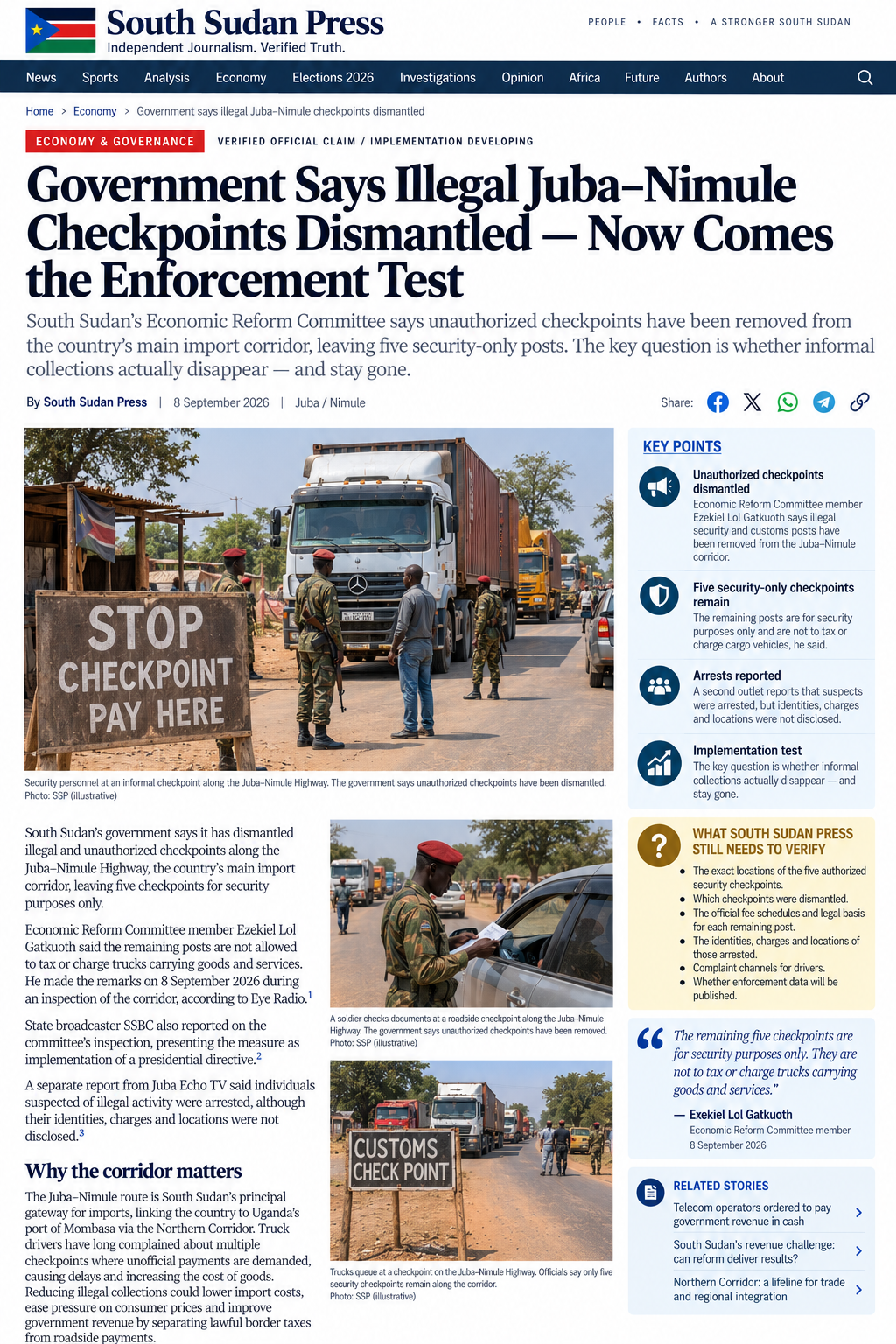
JUBA — South Sudan’s Economic Reform Committee says it has dismantled illegal and unauthorized checkpoints along the Juba–Nimule Highway, leaving five checkpoints that are supposed to operate for security purposes only and not collect taxes or charges from cargo vehicles.
Economic Reform Committee member Ezekiel Lol Gatkuoth said during an inspection of the corridor that unauthorized security and customs posts had been removed and that the five remaining checkpoints were not permitted to tax or charge trucks transporting goods and services.
The announcement is an important implementation claim on South Sudan’s main import corridor. It is not, by itself, independent evidence that informal collections have ended across the route.
What the government says has changed
Eye Radio reported on 8 September that the committee said illegal checkpoints had been removed along the Juba–Nimule Highway and only five security checkpoints remained. The remaining posts, according to Gatkuoth, are for security purposes and are not to tax or charge cargo vehicles.
State-broadcaster reporting also showed the committee inspecting the corridor and presented the action as implementation of a presidential directive. Juba Echo TV separately reported that suspects had been arrested in connection with alleged illegal activity, although identities, charges and locations were not disclosed in the report reviewed by South Sudan Press.
What is confirmed — and what is not
- Confirmed: the Economic Reform Committee inspected the corridor and publicly announced the removal of unauthorized checkpoints.
- Confirmed official position: five security-only checkpoints are to remain and are not supposed to tax or charge cargo vehicles.
- Reported: suspects have been arrested in connection with alleged illegal activity.
- Not yet independently established: that unauthorized collections have ceased everywhere along the corridor.
- Not yet publicly detailed in the reporting reviewed: the definitive locations and legal mandates of the five remaining posts, the identities and charges of arrested suspects, and a complaint mechanism for drivers.
Why the corridor matters
The Juba–Nimule road is South Sudan’s principal overland gateway for imports moving through Uganda and the wider Northern Corridor. Unofficial roadside payments and repeated stops can add delays and costs to freight, while unclear collection practices make it harder to distinguish lawful government revenue from informal payments.
If the new restriction is consistently enforced, it could reduce unnecessary cargo delays and informal costs while improving revenue accountability by separating legitimate border and customs charges from roadside collections.
But lower roadside charges would not automatically mean lower consumer prices. Freight rates, fuel costs, exchange rates, border charges, market competition and other factors also influence retail prices. Any claim that this reform has reduced the cost of living will require evidence over time.
The durability test
Similar efforts to reduce highway collections have been announced before, making durability the central question. The strongest evidence will come from whether truck drivers continue to encounter undocumented payments, new informal posts or unexplained delays after senior inspection teams have left the corridor.
For South Sudan Press, the most useful next step is to track the experience of drivers over several weeks and compare the number of stops, journey times, receipts and payments before and after the latest enforcement operation.
What South Sudan Press still needs to verify
- Where exactly are the five authorized security checkpoints?
- Which checkpoints were dismantled?
- What law or directive authorizes each remaining post?
- Which official fees, if any, may lawfully be collected along the corridor?
- Who was arrested, what offences are alleged and have charges been filed?
- How can drivers safely report renewed unauthorized collections?
- Will enforcement, complaints or prosecution data be published?
Now comes the enforcement test
The government’s announcement establishes a clear public standard: the five remaining checkpoints are described as security posts, not roadside revenue points. That makes implementation measurable.
If undocumented collections continue, authorities will need to explain whether those payments are lawful and who authorized them. If the collections disappear and journey times improve, the reform will have evidence of practical impact.
For now, the most accurate conclusion is narrower: the government says the unauthorized checkpoints have been dismantled. Whether the practice of unauthorized roadside collection has been dismantled with them remains an implementation question.
South Sudan Press will update this report if the government publishes the locations of the five authorized checkpoints, enforcement records, official fee schedules, complaint channels or further information about arrests and prosecutions.