
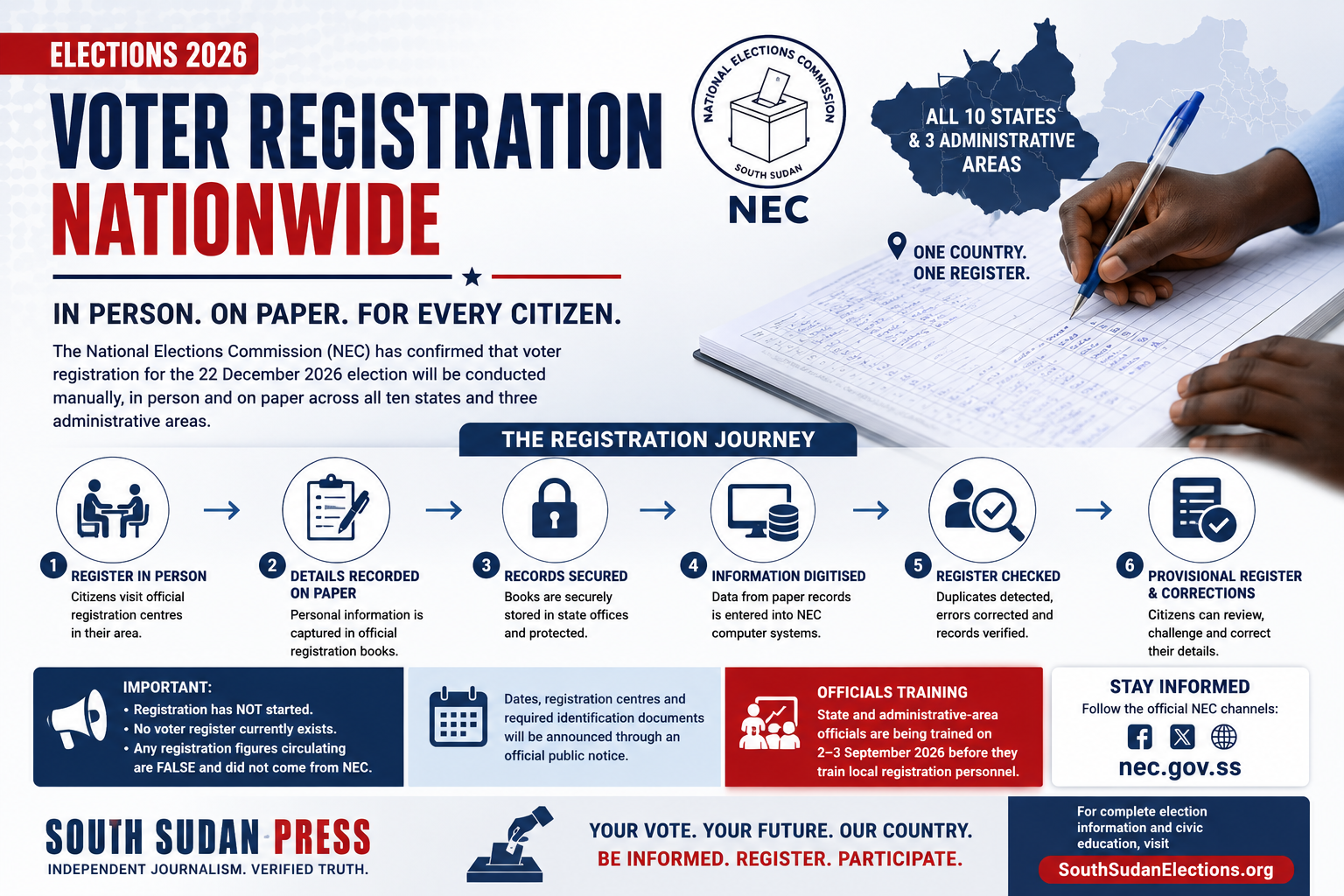
South Sudan now knows the basic architecture of its 2026 voter-registration system: a citizen will appear in person, details will be recorded on paper, and those records will later be entered into National Elections Commission computer systems.
That decision settles one question but opens a much larger one: what controls will ensure that the final digital register faithfully reflects the original paper record?
The central challenge is reconciliation
In a manual-to-digital system, the most important integrity control is the ability to reconcile what was written at registration centres with what ultimately appears in the electronic database.
If 1,000 people are entered into a registration book, election administrators should be able to demonstrate that exactly those valid records — no more and no fewer — moved into the digital system, subject to documented corrections, duplicate removals and legally authorised changes.
That requires more than competent data entry. It requires a chain of custody, record numbering, secure storage, controlled access and a clear audit trail for every correction.
Duplicate registration will be a defining test
The NEC has not yet publicly described its duplicate-detection method. That question matters because paper registration can make it easier for the same individual to attempt registration at more than one centre unless the system has a reliable way of detecting repeat entries.
Possible safeguards can include unique record numbers, strong identity checks, cross-centre database matching and documented adjudication of suspected duplicates. The NEC will need to explain which controls it intends to use and how parties, observers and citizens can gain confidence that those controls work.
Paper records can be an advantage — if preserved properly
The commission’s decision to retain original registration books in state offices could provide an important audit trail. A preserved physical record gives administrators and, where legally permitted, observers a source against which disputed digital entries can be checked.
But the value of that record depends on how the books are secured. Missing pages, unlogged alterations, poor storage, unauthorised access or unexplained discrepancies would weaken the usefulness of the paper archive.
The digitisation stage deserves observation
Most public discussion will naturally focus on registration centres, where citizens physically appear. Yet one of the most consequential stages may happen later, when handwritten information is entered into computer systems.
Transcription errors can change names, dates, locations or other details even without misconduct. A credible process should therefore include verification checks, reconciliation totals and a way to document who entered or changed each record.
Citizens need a chance to inspect the register
A voter register should not become final immediately after data entry. Citizens need a practical opportunity to find out whether they have been included correctly, whether their details are accurate and whether an ineligible or duplicate entry can be challenged through lawful procedures.
The NEC has not yet publicly set out the complete inspection, objection and correction process. Publishing those procedures early would help reduce disputes later.
Five safeguards worth watching
1. Chain of custody: Can every registration book be tracked from the centre to secure storage?
2. Reconciliation: Do totals in paper books match totals entered into the database?
3. Duplicate detection: How are repeat registrations identified and resolved?
4. Public inspection: Can voters check their own details before the register becomes final?
5. Audit access: What information will parties and accredited observers be allowed to inspect?
Inclusion will be as important as fraud prevention
A registration system can be technically secure and still fail if large numbers of eligible citizens cannot access it.
The NEC still needs to clarify how displaced people, refugees who may be eligible under the law, mobile pastoralist communities and citizens without conventional identity documents will navigate registration requirements.
The timetable is now part of the credibility question
The planned election is scheduled for 22 December 2026. Before that date, South Sudan must still open registration, register eligible voters, digitise the records, identify duplicates, correct errors, allow scrutiny and produce a register capable of supporting candidate and polling operations.
That is a substantial sequence of work. The closer registration moves toward election day, the less time remains for public inspection and correction.
The key question is therefore not whether paper is modern or old-fashioned. It is whether the system can be inclusive, traceable, auditable and correctable.
If the NEC publishes the rules early, protects the paper trail, explains its duplicate controls and creates a meaningful inspection period, a manual-to-digital model can still produce a credible register. If those safeguards remain opaque, public suspicion will grow even where no wrongdoing has been established.
Follow the registration process
SouthSudanElections.org will track official registration notices, deadlines, voter-information requirements and civic-education updates as they are released. Visit SouthSudanElections.org.