South Sudan’s Education Gap, from State Capitals to Bomas
The latest published national school census exposes uneven provision across states. Upper Nile’s repeated conflict, displacement and flooding show why a functioning classroom—and a child able to reach it—must be counted separately.
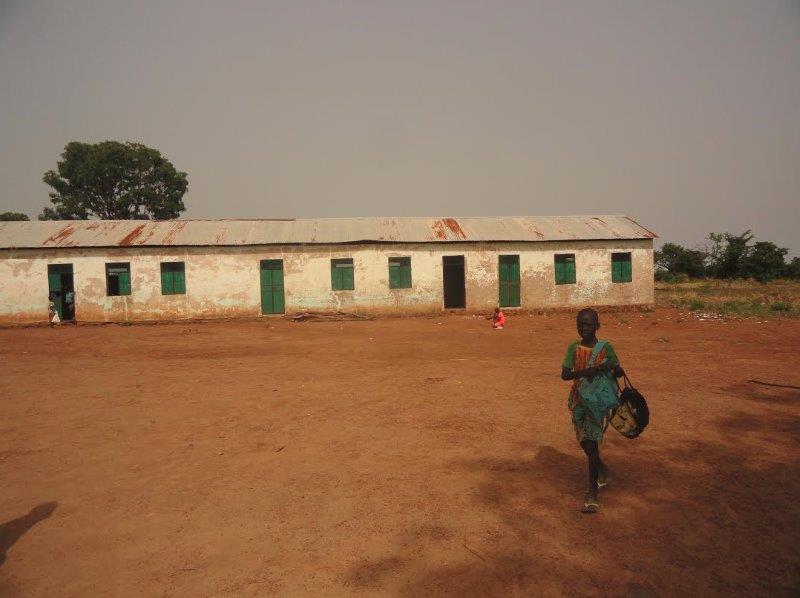
JUBA — An education recovery cannot be measured by a ribbon cutting alone. A school may appear on a register but remain closed; an open classroom may have no paid teacher; and an enrolled child may miss lessons because the route is unsafe, the family has moved, or floodwater has cut off the boma. These distinctions matter across South Sudan, where UNICEF says more than 2.8 million children are out of school.
The Ministry of General Education and Instruction’s 2023 National Education Census counted 7,737 schools and learning centres visited across the country. Of those, 1,281—about 17%—were recorded as non-operational. It recorded 2,215,494 learners enrolled across the programmes surveyed, and attendance of roughly seven in ten enrolled formal learners on the day of a school visit. These are different measures and reference populations: the enrollment figure cannot simply be subtracted from UNICEF’s out-of-school estimate.
State-by-state baseline
| State or administrative area | Non-operational, 2023 |
|---|---|
| Central Equatoria | 19% |
| Eastern Equatoria | 16% |
| Jonglei | 11% |
| Lakes | 16% |
| Northern Bahr el Ghazal | 23% |
| Unity | 4% |
| Upper Nile | 31% |
| Warrap | 14% |
| Western Bahr el Ghazal | 10% |
| Western Equatoria | 15% |
| Abyei Administrative Area | 0% |
| Greater Pibor Administrative Area | 31% |
| Ruweng Administrative Area | 3% |
| National | 17% |
Source: MoGEI, National Education Census Report 2023, Appendix 1. Percentages are rounded as published. A few component counts in the appendix do not sum precisely to their stated totals; the Ministry should reconcile the underlying records before the figures are used as a county allocation formula. The census includes several education levels and alternative programmes.
Upper Nile and Greater Pibor each had 31% of visited facilities recorded non-operational in 2023; Northern Bahr el Ghazal followed at 23%. The state averages conceal large differences between county headquarters and distant settlements. Conversely, the 4% recorded in Unity says little by itself about whether enough schools existed, whether displaced children were enrolled, or whether classes met regularly.
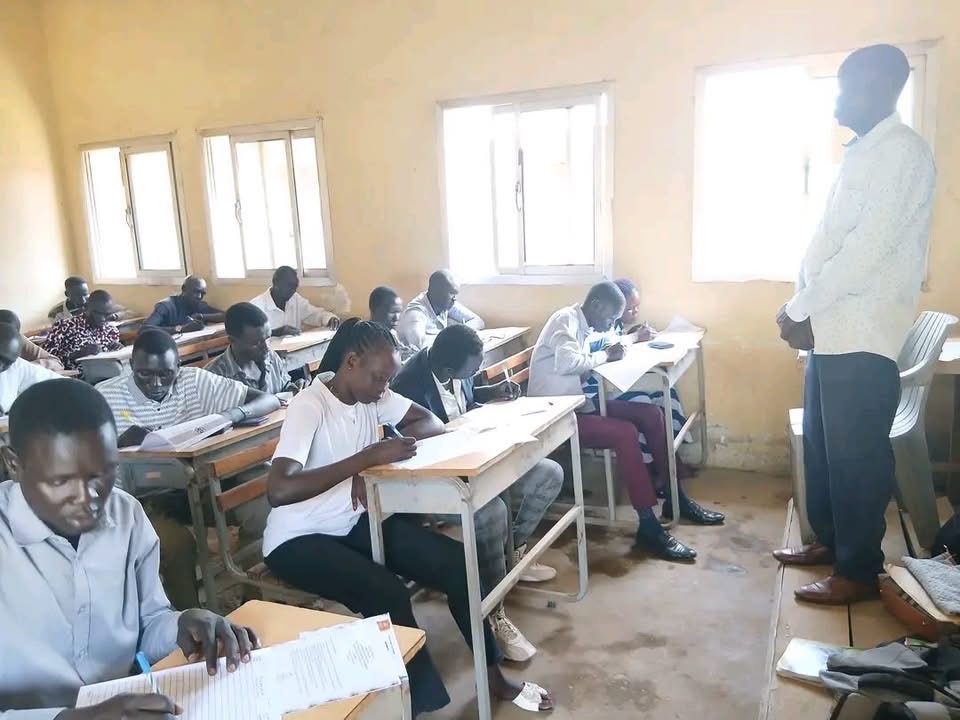
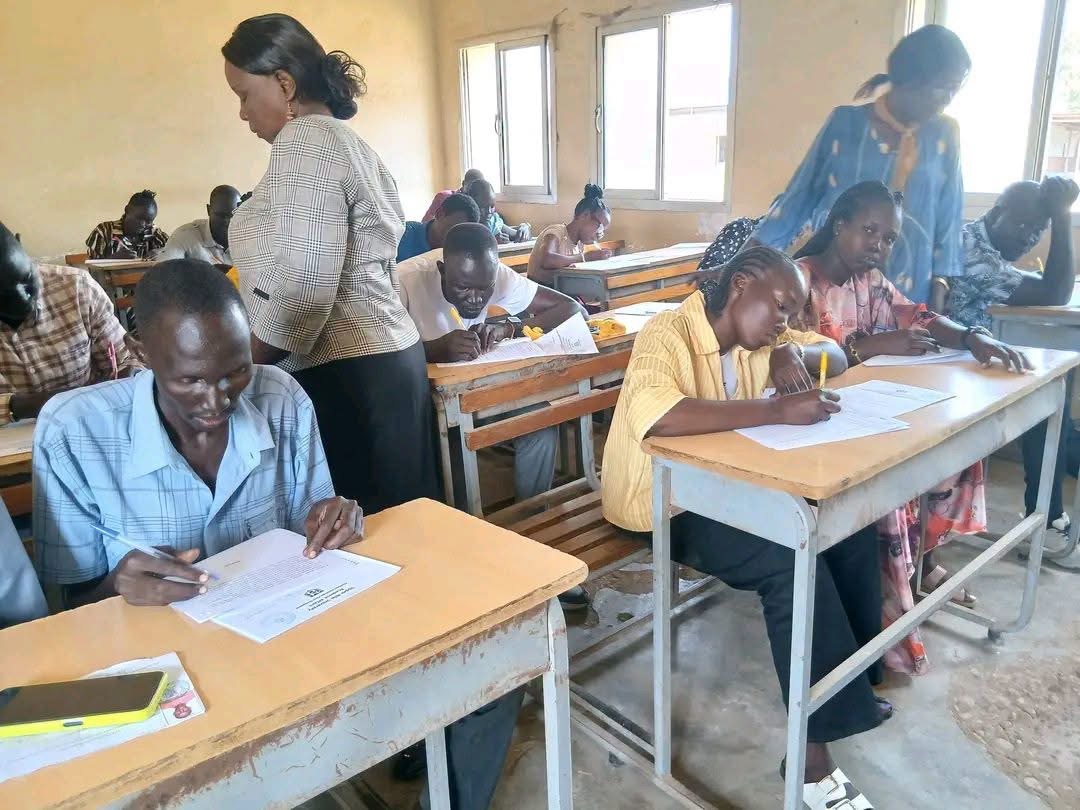
From state averages to county and boma reality
A useful county breakdown needs two sides of the fraction: a dated register of functional schools, seats and attendance, and a defensible estimate of school-age children in each catchment. Displacement and return make that denominator especially difficult. At boma level the same exercise must also map walking distance and travel safety, teacher presence, languages of instruction, accessible classrooms, water, separate toilets and days of teaching actually delivered. Nomadic families, children with disabilities, girls facing early marriage and children who missed several grades can disappear from a simple school count.
Published county evidence is uneven. In July 2025 UNICEF’s Education Cluster reported that all schools in Nasir County, Upper Nile, remained closed, leaving an estimated 14,000 learners without education access there. It reported some reopening in Ulang and Baliet and all 35 schools in Longechuk operational again, while cautioning that attendance was low and some facilities damaged or looted. In Central Equatoria the same report identified 7,477 displaced school-age children in sites without protective learning services. Those are dated local snapshots, not a comparable census of all counties.
No verified, current, nationwide boma-by-boma access-rate series accompanies the public national census reviewed for this article. South Sudan Press will not assign a percentage to every county or boma by dividing state totals. MoGEI, state ministries and education partners should publish a regularly updated school-level register with county, payam and boma codes, functional status, enrollment, attendance and closure days—while protecting children’s personal data.
Upper Nile: the interrupted years, 2014–2026
2014 onward: Fighting that began in December 2013 spread into Upper Nile. The destruction and displacement did not strike each county at the same time or for the same duration. A 2022 UNICEF account said Malakal had 46 schools before the fighting and only about half had reopened by then; Malakia school, destroyed in 2013, was rebuilt after nearly nine years.
2020–2021: Pandemic closures interrupted learning nationally. Flooding then displaced families along the Sobat corridor from Malakal toward the Ethiopian border. UNICEF documented an abandoned school used as shelter and education becoming scarce amid floodwater.
2022–2023: The Malakal protection-site school was used as shelter amid violence in September 2022, affecting more than 13,000 learners according to UNICEF. It reopened in May 2023 and then faced a further short closure during intercommunal violence. The national census later found 196 of 633 visited Upper Nile schools and centres non-operational—31% in its 2023 snapshot.
2025: Renewed insecurity in eastern Upper Nile produced another sharp interruption. UNICEF’s July situation report described every school in Nasir as closed, some schools reopened in Ulang and Baliet, and Longechuk’s 35 schools reported reopened. These conditions may have changed since July 2025; the report is evidence of disruption at that point, not a verified September 2026 status.
To 30 September 2026: Twelve years have elapsed since 2014, but there is no published child-level record establishing that every Upper Nile student lost twelve years of schooling. The missing measure is cumulative learning time: days taught and skills acquired for each cohort, including displaced children, returnees and those who aged out of school.
What the lost time means
A child who was six in 2014 would be about 18 now. That is a way to understand the age of a cohort, not a claim about its individual schooling history. Some continued learning in host communities or temporary centres; others experienced repeated interruptions. An effective catch-up plan must test literacy and numeracy, place learners at an appropriate level rather than automatically by age, offer accelerated education and support safe transitions into secondary school, vocational training or livelihoods.
Rebuilding walls and opening a college in Malakal are encouraging developments at different education levels. They cannot substitute for regular basic education in Nasir, Ulang, Longechuk, Malakal’s displaced communities and remote bomas. Teachers need predictable pay and support; families need safe routes and water; ministries need to know whether attendance recovers after each reopening. Girls and children with disabilities need deliberate provision rather than an assumption that a reopened school serves everyone.
What to measure next
For each state and county, publish the number of school-age children, operational schools, actual teaching days, enrollment and attendance by grade and gender, plus teacher staffing. For each payam and boma, identify communities without a reachable school and the barriers to access. For Upper Nile, add a dated closure-and-reopening log from 2014, distinguish conflict from flood and health interruptions, and assess foundational learning among overage pupils. Publish definitions and data collection dates so year-on-year comparisons are honest.
The first accountable national target is therefore a verified map of children able to learn now, not merely a count of buildings marked open. Until comparable county and boma data are released, the stark 2023 state figures and documented local interruptions indicate urgency—but cannot tell us precisely how many years each child has lost.